
“The rise of powerful AI will either be the best or the worst thing ever to happen to humanity. We do not yet know which.” -Stephen Hawking
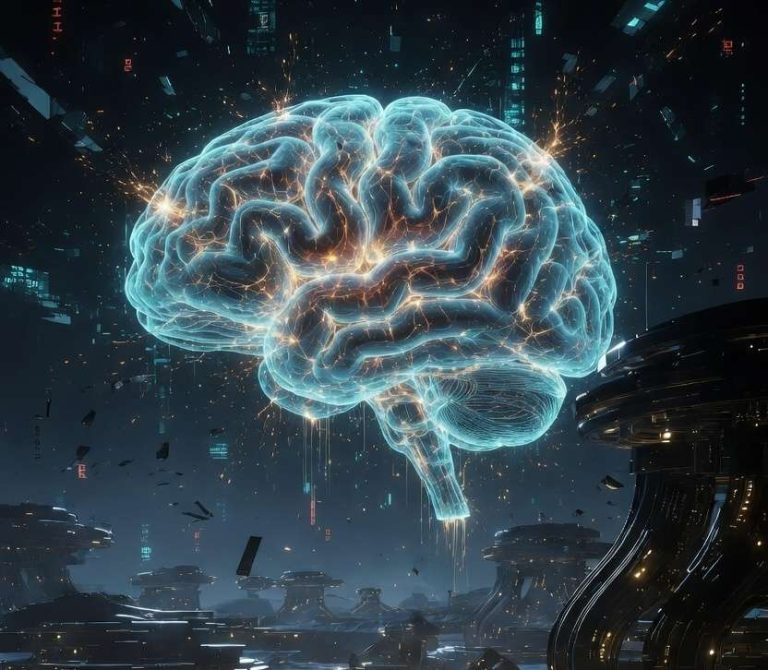
In the mid-20th century, the CIA’s MK-Ultra program required physical handlers to administer drugs, hypnosis, sensory deprivation, and other techniques in attempts to achieve mind control. Agents had to be present, monitor subjects, and intervene directly. These were costly, risky, and logistically demanding operations that limited scale and deniability.
Today, artificial intelligence has eliminated the need for that physical proximity. A smartphone in your pocket delivers personalized, real-time psychological influence at scale, turning everyday devices into tools of unprecedented behavioral control.
One of AI’s greatest strengths for those wielding it is built-in plausible deniability. When a recommendation algorithm “nudges” a user toward certain content, decisions, or emotional states, the outcome appears organic, a result of user preference rather than external direction. Social media feeds, search results, and targeted ads are shaped by machine learning models that optimize for engagement metrics. If a person is led toward radicalization, self-harm, or specific political actions, the platform can point to neutral “user-driven” personalization. The manipulation is diffused, automated, and deniable: no handler, no fingerprints, just code quietly optimizing for retention and profit or, in classified applications, for strategic outcomes.
The concept of the Manchurian Candidate, a programmable individual activated by a trigger, once required intensive, hands-on conditioning. Modern AI offers a far superior alternative. Machine learning models can profile individuals with granular detail, predict responses to stimuli, and deliver tailored sequences of content, notifications, and interactions that gradually shape beliefs, emotions, and behaviors. Unlike human handlers limited by time and biology, AI operates 24/7, scales to millions, and adapts in real time. It learns from every interaction, refining its “programming” to make the target more compliant, more suggestible, and more directed toward desired actions.
Behavioral economics introduced “nudging” – quiet, subtle changes in choice architecture that guide decisions without restricting freedom. AI supercharges this into weaponized synchronicity. Algorithms can orchestrate sequences of events that feel profoundly meaningful: a post appears right after a personal crisis, a recommendation aligns with a fleeting thought, a notification arrives at the exact moment of doubt. These engineered coincidences exploit the human tendency to find patterns and meaning (apophenia), creating a sense of destiny or cosmic confirmation. When AI controls the timing and content across platforms, it can make fate feel real. Effectively nudging people toward relationships, purchases, ideologies, or actions as if the universe itself is conspiring. The more data the system has, the more convincing the illusion becomes.
Human profilers rely on observation, intuition, and limited data. Machine learning models ingest vast datasets; search history, likes, dwell time, typing patterns, location pings, voice inflections, even biometric signals from wearables, then identify correlations no human could detect. Trained on baselines from the best psychological profilers and behavioral scientists, these systems outperform individual experts in predicting personality traits, emotional states, and future behavior. Studies have shown AI models achieving higher accuracy in correlating personality questionnaire items than most academic psychologists.
Once trained, the AI continuously refines its profile, turning every interaction into training data. This creates a feedback loop where the system knows you better than you know yourself, and uses that knowledge to guide decisions with precision.
The ultimate capability is trap-setting at scale. AI can map psychological vulnerabilities; impulsivity, loneliness, ideological leanings, then deliver escalating sequences: first content that normalizes extreme views, then material that builds anger or fear, followed by calls to action that appear self-generated. The user feels they arrived at the conclusion independently, walking willingly into a radical group, a scam, a violent act, or a controlled narrative. Plausible deniability remains intact: the algorithm was simply “helping” with relevant suggestions. In classified contexts, this becomes a perfect tool for steering individuals into compromising situations like financial traps, honeypots, or self-sabotage, without any direct human involvement.
The transition from physical handlers to algorithmic ones is complete. What once required covert agents now runs silently on servers, powered by machine learning that profiles, nudges, synchronizes, and traps with superhuman efficiency. The danger is not that AI will become conscious; it is that it already enables control at a scale and subtlety that rivals (or exceeds) the wildest ambitions of past mind-control programs.